Coffee plantations, cacao workshops, honey, vineyards, tropical produce and the daily catch connect travelers with the farmers, fishers and chefs shaping the flavors of Mexico’s Pacific coast.
Riviera Nayarit, Mexico, August 11, 2026 — In Nayarit, farm-to-table can mean starting the morning among coffee plants in the mountains of Compostela, learning how cacao becomes a handmade chocolate bar in Ixtlán del Río and ending the day with fish pulled from the Pacific and prepared over an open flame.
Mexico’s Pacific coast state has long been known for seafood and dishes such as pescado zarandeado, but its culinary identity reaches from the ocean deep into its mountains, valleys and agricultural communities. Coffee, cacao, honey, wine grapes, corn, tropical fruits, vegetables and agave are among the products connecting Nayarit’s landscapes with its kitchens.
For food-focused travelers, that means the journey does not have to begin at the restaurant. It can start at the source.
From cacao bean to chocolate bar
In the Pueblo Mágico of Ixtlán del Río, cacao offers one of Nayarit’s most hands-on culinary experiences.
The Cacao, Cultura y Magia route combines history and gastronomy, beginning with a visit to the Los Toriles archaeological site before introducing travelers to the process of making traditional Mexican table chocolate.
At the Ma’Nena chocolate workshop, participants can follow cacao through roasting and preparation before creating chocolate tablets themselves. The experience connects an ingredient with deep roots in Mexican history to the people keeping artisanal chocolate-making traditions alive today.
The route can also include regional mixology and time in Ixtlán del Río’s historic center, turning chocolate into an entry point for understanding the broader culture of southern Nayarit.
Coffee from the mountains of Compostela
Travel farther north and elevation changes what grows.
The mountains surrounding Compostela provide the altitude, humidity and volcanic soils that have helped establish Nayarit as a coffee-producing state. At plantations such as Cumbres de Huicicila, visitors can learn about cultivation, harvesting, processing and roasting while meeting the people responsible for taking coffee from fruit to cup.
Nayarit’s relationship with coffee gained additional significance in 2026 with the recognition of Café Nayarit with a denomination of origin, strengthening the connection between the product and the geography, climate and communities where it is produced.
For travelers, a coffee route through Compostela provides an opportunity to see an everyday ingredient differently. The cup served at breakfast can be traced back to a hillside, a farmer and a growing process shaped by Nayarit’s landscape.
Honey and the landscapes behind it
Honey adds another layer to Nayarit’s agricultural story.
Across the state, beekeepers work within ecosystems that range from tropical coastal vegetation to forests and agricultural landscapes. The resulting honey reflects the flowers and plants surrounding the hives, creating a product closely connected to place.
For travelers interested in sustainable and community-based tourism, locally produced honey also opens conversations about pollination, biodiversity and the importance of bees to the fruits, vegetables and other crops found throughout Nayarit.
Honey increasingly appears not only at local markets but in restaurant kitchens, desserts, cocktails and contemporary interpretations of regional cuisine.
Wine with a view of a volcano
Nayarit’s farm-to-table story even includes wine.
In the mountains of the Pueblo Mágico of Jala, Meseta del Cielo, the state’s first vineyard, has been cultivating European grape varieties including Syrah and Macabeo since 2019.
Located in Cofradía de Juanacatlán near the Ceboruco volcano, the vineyard offers guided tours, tastings and pairings that introduce visitors to an unexpected side of Mexican wine country. Its Syrah has earned national recognition, while the vineyard also produces Santa Sirena, an original hibiscus-based wine.
The experience is particularly revealing for travelers who associate Nayarit exclusively with tropical beaches. Within the same state, the Pacific gives way to mountains, volcanic soils and vineyards — and an entirely different set of flavors.
Where the Pacific becomes the pantry
Then there is the ingredient that has defined Nayarit’s cuisine for generations: seafood.
Fishing communities along more than 200 miles of coastline bring shrimp, oysters, fish and shellfish from the Pacific to kitchens ranging from simple beachfront restaurants to some of Mexico’s most ambitious dining rooms.
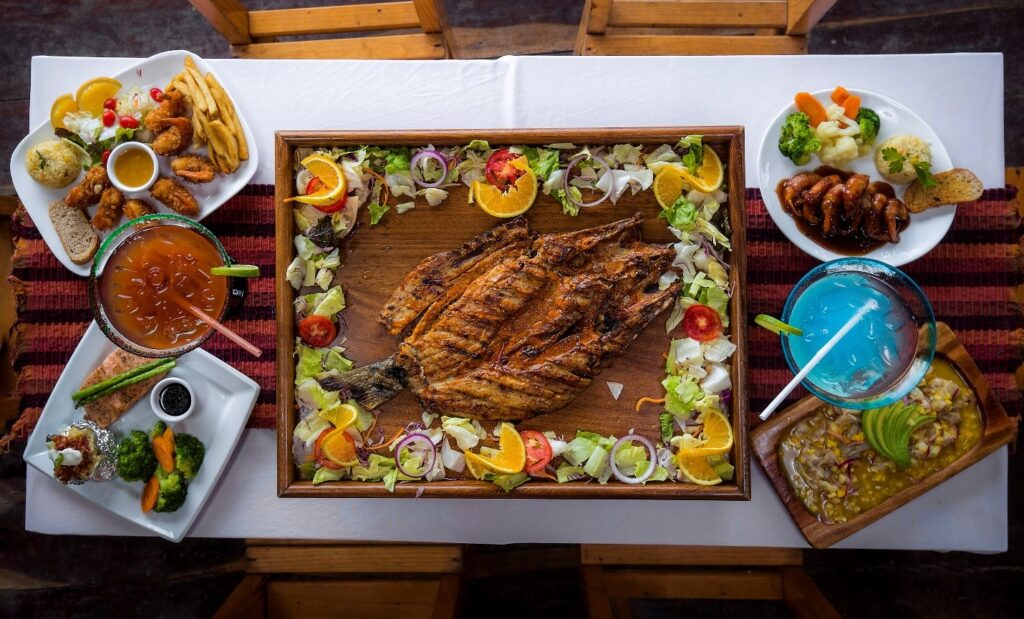
Few dishes illustrate that relationship better than pescado zarandeado. With origins associated with Mexcaltitán and Nayarit’s pre-Hispanic fishing traditions, the preparation traditionally places seasoned fish over an open fire, creating one of the signature flavors of the state’s coastal cuisine.
Aguachile, ceviche, chicharrón de pescado and tlaxtihuilli — a regional preparation combining seafood, corn and chile — further demonstrate how generations of cooks have built a culinary identity around what comes from the water.
In San Blas, Mexcaltitán, La Cruz de Huanacaxtle and communities throughout Riviera Nayarit, the distance between boat and plate can be remarkably short.
From tropical orchards to restaurant kitchens
Nayarit’s climate and geography also produce an abundance of fruits and vegetables that move through markets, family kitchens and restaurants across the state.
Mangoes, bananas, coconuts, pineapples, avocados, limes and other tropical fruits thrive in the region, while corn, chiles, tomatoes and seasonal vegetables provide the foundation for countless traditional dishes.
That agricultural diversity gives chefs an unusually broad pantry.
The same ingredient might appear simply prepared in a market or family kitchen and later emerge in an entirely different form at one of Riviera Nayarit’s luxury restaurants. Increasingly, the connection between those two worlds — producer and chef, tradition and innovation — is becoming part of the destination’s culinary appeal.
From traditional kitchens to destination dining
Nayarit’s restaurant scene now spans everything from generations-old seafood preparations and traditional cooks to internationally recognized chefs and ambitious resort restaurants.
In Tepic, Emiliano Comida y Vino was named Best Gourmet Restaurant in the 2025 Lo Mejor de Nayarit awards, while El Rincón del Campesino in Jala was recognized for traditional Nayarit cuisine. The previous year’s awards recognized Loma 42 in Tepic for gourmet dining and Los Zarandeaditos for traditional cuisine.
Along the coast, the dining scene has become one of Riviera Nayarit’s attractions in its own right.
At Rubra in Punta de Mita, acclaimed Mexican chef Daniela Soto-Innes draws inspiration from Mexican ingredients and the surrounding landscape. Carao, at One&Only Mandarina, carries the culinary vision of chef Enrique Olvera into a setting overlooking the Pacific, while Toppu at Rosewood Mandarina brings together Japanese influences and ingredients from Mexico’s coast.
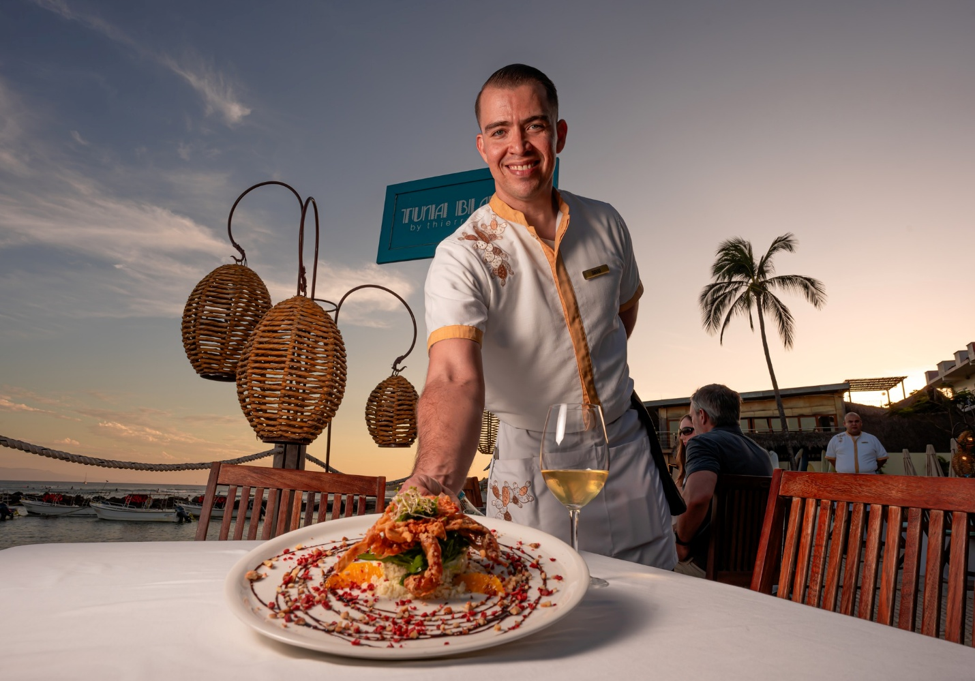
In Punta de Mita, Tuna Blanca by Thierry Blouet has become another established name in the region’s dining scene, while restaurants including Héctor’s Kitchen continue to help define the area’s contemporary culinary identity.
What links many of these experiences is access to ingredients that begin close to home: seafood from the Pacific, vegetables and herbs from regional producers, tropical fruit and other products that allow chefs to build menus around seasonality and place.
Following the ingredient instead of the menu
For culinary travelers, Nayarit offers the opportunity to structure a trip differently.
Rather than moving from restaurant reservation to restaurant reservation, visitors can follow ingredients across the state.
Start with coffee among the mountains of Compostela. Make chocolate in Ixtlán del Río. Visit a vineyard beneath the volcanic landscapes of Jala. Discover honey and local produce from small-scale producers. Meet fishing communities along the coast. Then taste how chefs and traditional cooks transform those ingredients at the table.
Nayarit’s gastronomy ultimately reflects its geography. The Sierra Madre Occidental meets fertile valleys, tropical landscapes and the Pacific Ocean, creating a pantry that changes dramatically within relatively short distances.
That diversity is helping transform the state into a destination where travelers can do more than eat well.
They can discover where dinner comes from.
###
About Nayarit
Located on Mexico’s Pacific coast, Nayarit brings together more than 200 miles of coastline, mountains, agricultural valleys, islands and historic communities. The state is home to nine Pueblos Mágicos and offers tourism experiences spanning gastronomy, culture and community tourism, nature, adventure, wellness and luxury travel.
About ENroute Communications ENroute Communications is a New York-based public relations and destination marketing agency specializing in travel, tourism and hospitality. The agency represents destinations and travel brands across the United States, Canada, Mexico and Latin America, developing integrated communications strategies that include media relations, travel trade outreach, press and familiarization trips, strategic partnerships, events and brand activations. ENroute Communications serves as Nayarit’s public relations and tourism representation agency in the United States and Canada.